
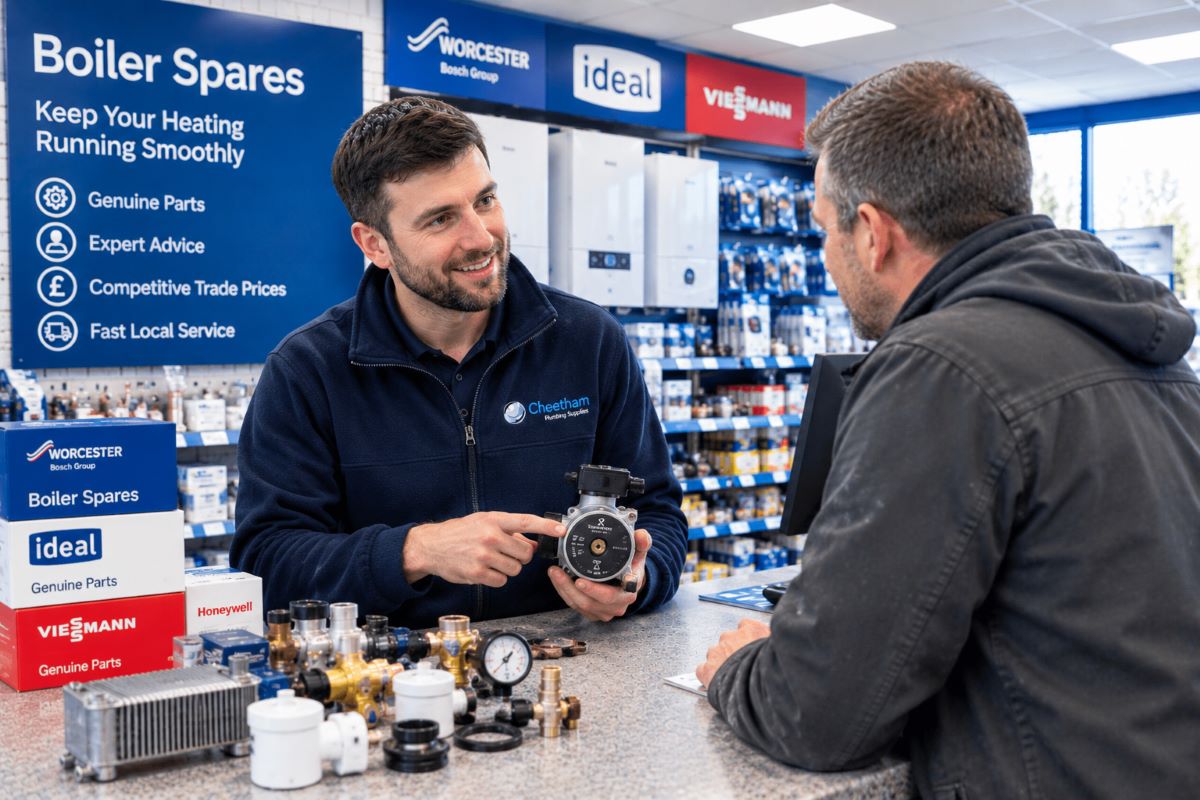
Every heating engineer knows the feeling. You've diagnosed the fault, the customer is waiting, and the part you collected doesn't fit.
Every homeowner knows a different version of it. The boiler's down, the house is freezing, and the part that arrived in the post is nearly right.
Either way, the result is the same: lost time, wasted money and a heating system that's still not working.
This guide helps you avoid that. Whether you're a Manchester homeowner trying to understand what's gone wrong, or a tradesperson who wants fewer wasted trips, here's how to get the right boiler spare the first time.
Why "Close Enough" Never Works With Boiler Parts
Boiler components are rarely interchangeable. Two units from the same manufacturer can look alike and still need different parts.
Getting it wrong can mean:
- Days without heating while you wait for a replacement
- Non-returnable parts, especially electrical items once they've been fitted
- Repeat breakdowns if the real fault is never fixed
- Safety concerns, because a boiler is a gas appliance and needs to be treated carefully
A little preparation before you buy removes most of these risks.
What Are Boiler Spares?
Boiler spares are replacement components used to repair or maintain a boiler. Common examples include diverter valves, pumps, circuit boards (PCBs), pressure sensors, expansion vessels and thermistors. The right spare depends on your boiler's make, model and Gas Council (GC) number, not just the fault you can see.
For Homeowners: How to Work Out What Your Boiler Needs
You don't need to be an engineer to gather the right information. Follow these five steps before you contact a supplier or an engineer.
- Find the data plate. It's usually inside the casing or on the underside of the boiler. Note the manufacturer and model name.
- Write down the GC number. This Gas Council number identifies your exact boiler model, and parts catalogues rely on it.
- Record the fault code and symptoms. Photograph the display. Note whether you've lost heating, hot water or both, and whether you can hear anything unusual.
- Check the pressure gauge. Low or unstable pressure is a useful clue. Follow your manufacturer's manual if you're topping it up.
- Speak to a professional before buying. Ideally, your Gas Safe engineer confirms the faulty part. Then a parts specialist can match it to your model.
Quick tip: Save a photo of your boiler's data plate to your phone today. It could save you a long search later.
For Tradespeople: Getting It Right on the First Visit
If you fit and repair boilers for a living, wasted trips hit your margins directly. A few habits help:
- Photograph the data plate on the first visit. Take the make, model and GC number away with you.
- Note the faulty part's markings. Part numbers and stamps speed up matching.
- Diagnose before you order. Confirm the fault rather than guessing from symptoms alone.
- Call ahead. A quick call to your merchant confirms what's on the shelf before you drive across Manchester.
- Use a trade account. It simplifies repeat purchasing and keeps your paperwork tidy.
For more on what to look for in a supplier, see our guide to plumbing supplies for contractors in Manchester.
Need boiler spares in Manchester? Call Cheetham Plumbing Supplies on 01617 956444 or 07832 196204.
Common Boiler Spares and the Warning Signs
Here are the components that most often need replacing, and what failure tends to look like.
| Boiler part | What it does | Common warning signs |
|---|---|---|
| Diverter valve | Switches heat between radiators and hot water | Hot water but no heating, or the reverse |
| Pressure sensor / gauge | Monitors system pressure | Odd readings or random lockouts |
| Expansion vessel | Absorbs pressure changes as water heats | Pressure that keeps dropping or spiking |
| Pump | Circulates water around the system | Cold radiators, noise, overheating |
| PCB (circuit board) | Controls the boiler's functions | Erratic behaviour, repeat fault codes |
| Thermistor | Measures water temperature | Temperature swings, boiler cutting out |
| Ignition electrodes | Light the burner | Clicking with no flame |
| Fan | Moves air and flue gases | Fault codes, failed ignition |
Treat this as a guide, not a diagnosis. Different faults often share the same symptoms, so a qualified engineer should confirm the cause before any part is replaced.
If repairs are becoming frequent, it may be time to consider a replacement. Our article on signs your boiler needs replacing will help you weigh it up.
Heating Supplies in Manchester: Looking Beyond the Boiler
Not every heating fault starts inside the boiler. Sometimes the problem is elsewhere in the system, which is where good heating supplies in Manchester matter.
Components worth knowing about include:
- Thermostatic radiator valves (TRVs) for radiators that won't regulate
- Motorised and zone valves for uneven heating
- Magnetic system filters to catch sludge
- Inhibitor and cleaning products to slow corrosion
- Circulating pumps and pump valves for flow problems
Sludge is a common hidden cause of repeat failures. If the same part keeps failing, the water quality in your system may be the real culprit.
Browse our range on the heating supplies page, or call us if you aren't sure what to look for.
Water Heater Parts in Manchester: Don't Forget Hot Water
Many properties have a cylinder or electric water heater alongside, or instead of, a boiler. These have their own set of components.
Typical water heater parts in Manchester requests include:
- Immersion heater elements
- Cylinder and immersion thermostats
- Pressure relief and temperature relief valves
- Expansion vessels
- Tundishes and associated fittings
A safety note on unvented cylinders: these are pressurised systems. Buying the right part is simple, but fitting it should be left to a suitably qualified installer.
Genuine, Compatible or Second-Hand Parts?
You'll normally be offered three options:
- Genuine manufacturer parts: Made or approved by the boiler maker. Often the safest choice for critical components.
- Quality compatible parts: Made by third parties to suit specific boilers. A reasonable option when they come from a reputable supplier.
- Second-hand or refurbished parts: Quality varies. Be cautious with anything safety-related.
A good merchant will explain the trade-offs honestly instead of simply pushing the priciest option.
What You Can Do Yourself and What Needs a Gas Safe Engineer
In the UK, work on gas appliances must be carried out by a Gas Safe registered engineer.
Homeowners can generally manage simple, non-gas tasks, such as:
- Checking system pressure (following the manufacturer's guidance)
- Bleeding radiators
- Gathering model details and fault codes
Anything involving the burner, the flue, or the gas side of the boiler belongs with a registered professional. You can check an engineer's credentials on the Gas Safe Register before they start work.
Why Buy Boiler Spares Locally in Manchester?
Online listings can look cheaper, but they rarely come with someone who can look at your old part and confirm the new one matches.
A local independent Manchester trade counter offers:
- Practical advice from staff with real plumbing experience
- Faster turnaround when you can collect instead of waiting for delivery
- Trade-friendly service, including account facilities and competitive pricing
- Local reach across Manchester, Salford, Oldham, Stockport, Cheadle, Eccles and Ashton-under-Lyne (see all areas we cover)
If your heating has failed and time is tight, read our guide to emergency plumbing supplies in Manchester. To compare suppliers more broadly, see how to choose an independent plumbers merchant.
FAQs
1. Where can I buy boiler spares in Manchester?
Local plumbing and heating merchants with a trade counter are the best place to start. Cheetham Plumbing Supplies, on Elizabeth Street in Manchester (M8 8BB), serves homeowners and trade customers across Greater Manchester. Call ahead to check availability. You can also read our guide on where to buy heating supplies in Manchester.
2. How do I find the right part for my boiler?
Start with the make, model and GC number from your boiler's data plate. Add the fault code and symptoms, then confirm the match with a parts specialist or your engineer before you buy.
3. Are boiler parts universal?
No. Most boiler spares are specific to a manufacturer, model or range. Some generic items, such as certain valves and pumps, fit multiple systems, but always confirm compatibility first.
4. Can I replace a boiler part myself?
Gas-related work must be done by a Gas Safe registered engineer. Homeowners can handle simple jobs like bleeding radiators, but shouldn't open or repair gas components.
5. Should I bring the old part with me?
Yes, if you can. Comparing old and new side by side is the easiest way to avoid a mismatch. If not, bring clear photos and your boiler's details.
6. Is it worth repairing an old boiler?
It depends on the boiler's age, the cost of the part and how often it has broken down. If faults are frequent or parts are hard to find, replacement may make more sense.
7. Do you supply water heater parts in Manchester?
Yes, we can help with a range of hot water and heating components. Call or visit with your unit's details and we'll point you in the right direction.
Conclusion: Do the Groundwork, Fix It Once
The best boiler repairs are decided before the part is bought. Know your model, note the GC number, record the symptoms and confirm the part with someone who knows what they're looking at.
Do that, and you'll skip the wrong deliveries, the extra trips and the extra days in a cold house.
Bring your boiler details and we'll help you find the right part. You can also browse all of our products.